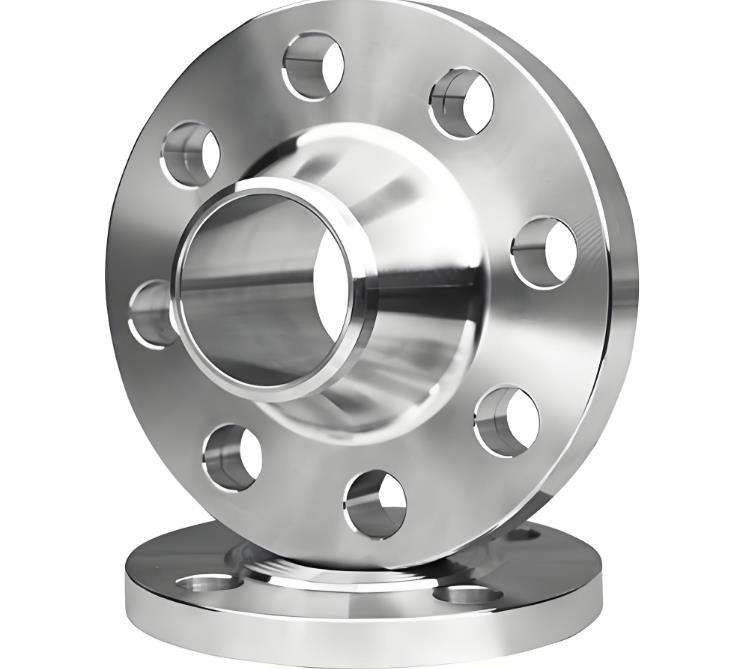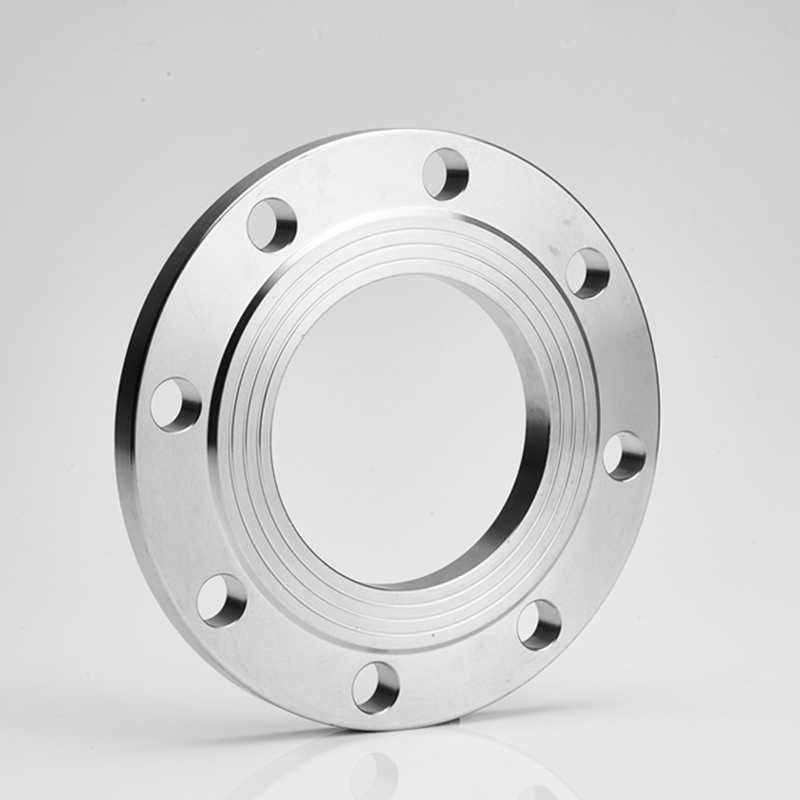
Flange, also known as flange flange disc or flange. Flange is a shaft and shaft interconnecting parts, used for connection between pipe ends; also used in equipment import and export of the flange, used for the connection between two devices, such as reducer flange. Flange connection or flange joint, refers to the flange, gasket and bolt three interconnected as a group of combined sealing structure of the detachable connection. Piping flange refers to the piping device in the piping flange, used in equipment refers to the import and export of equipment flange. In the pipeline flange according to the valve nominal pressure level of different configurations of different pressure levels of the flange, according to the international more commonly used several flange pressure level classification is introduced:
According to ASME B16.5 flanges have 6 pressure levels: Class150 – 300 – 400 – 600 – 900 – 1500 – 2500. The pressure level of the flanges is very clear, Class300 flanges can withstand more pressure than Class150, because Class300 flanges need to be made of more materials to manufactured so that they can withstand greater pressure. However, the ability of a flange to withstand pressure is affected by a number of factors. The pressure rating of a flange is expressed in pounds, and there are different ways to express a pressure rating. For example: 150Lb, 150Lbs, 150# and Class150 mean the same thing.
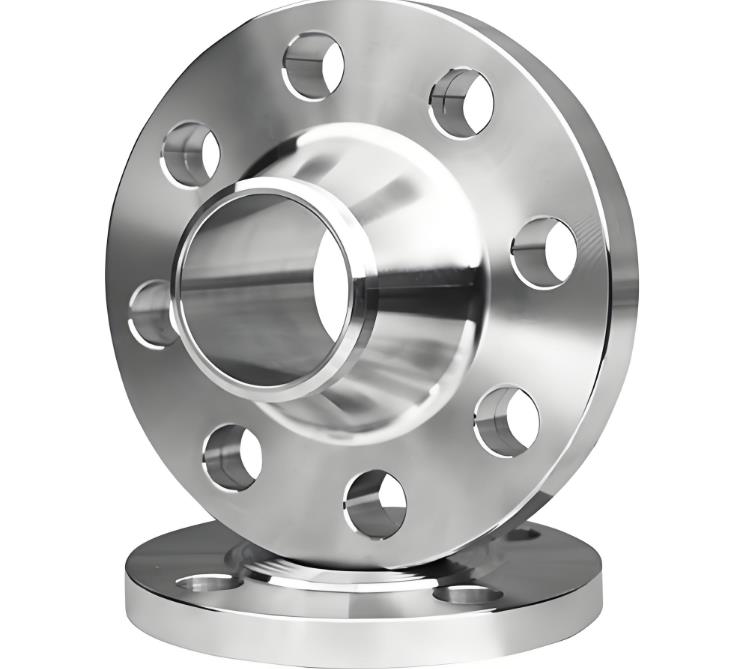
Pressure Rating Examples
ASME B16.5 flanges have different temperatures and different pressure capacities. As the temperature rises, the pressure capacity of the flange decreases. For example, a Class 150 flange has a pressure holding capacity of 270 PSIG at room temperature, 180 PSIG at 400°F, 150 PSIG at 600°F, and 75 PSIG at 800°F.
In other words, as the pressure drops, the temperature is allowed to rise and vice versa. Since flanges can be manufactured from different materials, such as stainless steel, cast iron, ductile iron, carbon steel, etc., each material has a different pressure rating.
Example of flanges for NPS12 (DN300)), as you can see, the diameter of the flange bore and the protruding face are the same. However, the outer diameter of the flange, the diameter of the centre circle of the bolt holes, and the diameter of the bolt holes become larger as the pressure rating increases.
The number and diameter of bolt holes are: CL 150 – 12 x 25.4; CL 300 – 16 x 28.6; CL 400 – 16 x 34.9 ;CL 600 – 20 x 34.9; CL 900 – 20 x 38.1; CL 1500 – 16 x 54; CL 2500 – 12 x 73
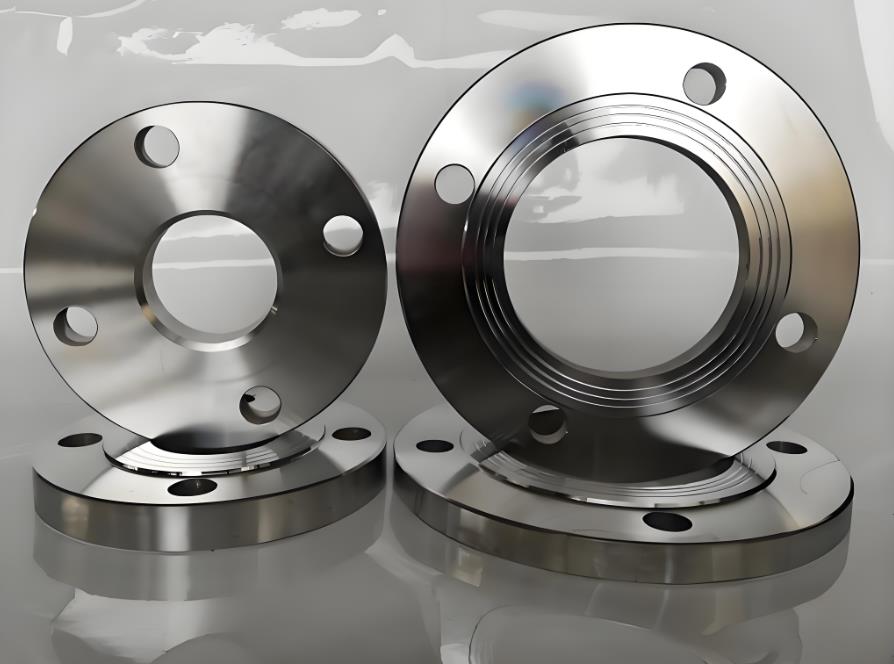
Pressure-Temperature Ratings-Examples
Pressure-temperature ratings are the allowable working gauge pressures (pressures in Bar) for materials and grades at rated temperatures (degrees Celsius). For intermediate temperatures, a linear insertion method of determination is permitted. However, insertion between flange grades is not permitted If the bolts and gaskets of a flange joint comply with the relevant qualifications and the setting and assembly of the flange joint comply with good regulations, such a flange joint may be suitable for pressure-temperature ratings. It is the responsibility of the user if the latter is used for flanged joints that do not comply with these qualifications. The temperature rating corresponding to the pressure rating is the temperature of the shell of the pressurised vessel in which the flanges and flange fittings are stored. Generally, this temperature is the same as the temperature of the stored fluid. The responsibility for not selecting a pressure rating based on the temperature of the stored fluid is the responsibility of the user. When the temperature is below -29°C (-20°F), the rating should be no greater than the rating at -29°C (-20°F).
As an example, here are two groups of materials according to ASTM and their pressure-temperature ratings according to ASME B16.5.
Shall not be used above 425°C.
Shall not be used above 455°C.
shall not be used above 370°C.
Shall not be used above 260°C.6 types of flanges and sealing surface forms
Slip On Flange (SOF)
The sealing surface of slip on flanges are as follows: raised face (RF), female face (FM), male face (M), tongue face (T), groove face (G), ring joint face (RJ). Advantages: on-site installation is more convenient, can omit the weld beat kneading process Disadvantages: flat welding flange with neck neck height is lower, the stiffness of the flange, the bearing capacity has been improved. Compared with butt-welding flange, the welding workload is large, the consumption of welding rod is high, and it can not withstand high temperature and high pressure and repeated bending and temperature fluctuations.
Welding Neck Flange(WNF)
The sealing surfaces of butt-welding neck flanges have the following forms: raised face (RF), female face (FM), male face (M), tongue face (T), groove face (G), ring joint face (RJ). Advantages: the connection is not easy to deformation, good sealing effect, wide range of applications, suitable for temperature or pressure fluctuations in the pipeline or high-temperature, high-pressure and low-temperature pipeline, also used for the transport of expensive media, flammable and explosive media, toxic gases on the pipeline Disadvantages: necking butt-welding flanges are bulky in size and weight, expensive, and installation and positioning is very difficult. Therefore, it is easier to bump in the transport.
Socket Welding Flange(SOF)
The sealing surfaces of socket welding flanges are as follows: raised face (RF), female face (FM), male face (M), tongue face (T), groove face (G), ring joint face (RJ). Applications: boiler pressure vessels, petroleum, chemical, shipbuilding, pharmaceutical, metallurgy, machinery, stamping elbow food and other industries. Commonly used in CL 150, CL 300 pipelines.
Threaded Flange(T)
The sealing surface forms of threaded flanges are: raised face (RF), female face (FM), male face (M), tongue face (T), groove face (G), ring joint face (RJ). Threaded flange is a kind of non-welded flange that the inner hole of the flange is processed into pipe threads and matched with the pipe with threads to achieve connection. Advantages: it is compared with flat welding flange or butt welding flange, threaded flange has the characteristics of easy installation and maintenance, and can be used in some pipelines where welding is not allowed on site. Alloy steel flange has enough strength, but not easy to weld, or welding performance is not good, can also choose threaded flange. Disadvantages: in the pipeline temperature changes drastically or the temperature is higher than 260 ℃ lower than -45 ℃ conditions, it is recommended not to use the threaded flange, in order to avoid leakage.
Binge Flange (BL)
The sealing surface of binge flangehas the following forms: raised face (RF), concave face (FM), convex face (M), tongue and groove face (T), groove face (G), ring joint face (RJ). Flange cover is also called blind flange, blind plate. It is the flange without hole in the middle for sealing the pipe plug. The role is the same as welded head and wire-button pipe cap, except that blind flange and wire-button pipe cap can be unloaded at any time, while welded head can not.