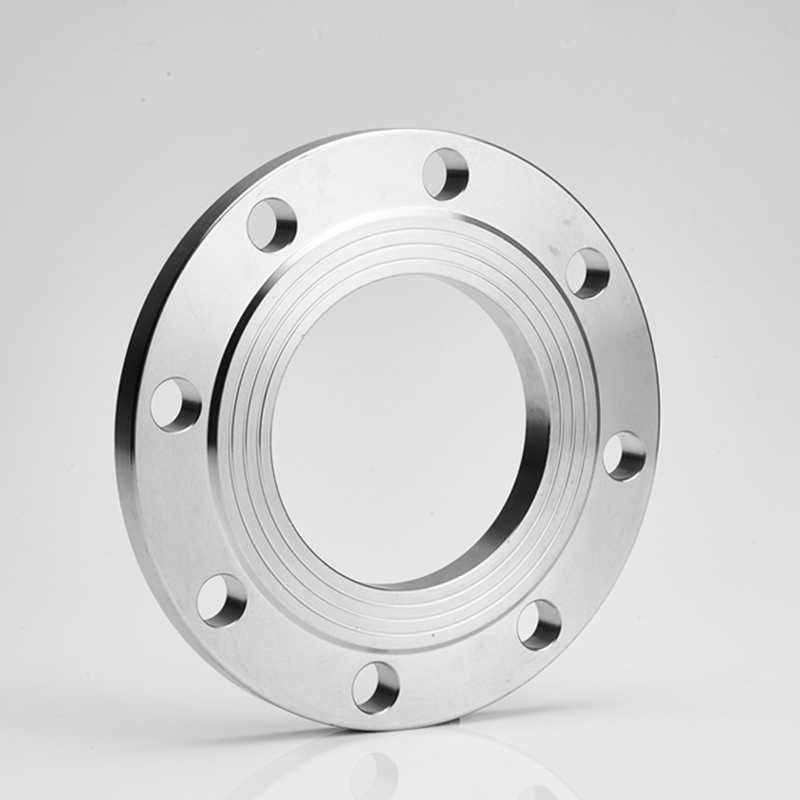
1. The definition difference between flanges and blind plates
Flange:
It is a disc-shaped component used for connecting pipes, equipment, or valves, achieving sealing and fixation through bolts and gaskets. Common types include flat welding flanges, butt welding flanges, socket welding flanges, threaded flanges, and loose flanges.
Blind plate:
A blind plate is a special flange without a through hole, also known as a flange cover/blind flange/blind plate flange or end flange, primarily used to block the ends of pipes or equipment interfaces. Its function is similar to that of end caps and pipe caps, but blind flanges use flange connections, making them removable and suitable for situations requiring subsequent maintenance or expansion; whereas end caps and pipe caps are generally welded and non-removable, typically used for permanent sealing.
2. The usage difference between flanges and blind plates
Flange:
A flange is a type of pipe connection component, primarily used to connect pipes, valves, or equipment, allowing media to flow through its hollow center, ensuring the fluidity of the piping system, while providing removability through bolt fixation, widely used in system operation, expansion, or maintenance scenarios.
Blind plate:
A blind plate is a solid closed component used to block the ends of pipes or isolate sections of piping, preventing media flow. It can achieve permanent sealing through welding or temporary removable closure in the form of a blind flange, commonly used in situations such as pipe shutdowns, maintenance, or pressure testing.
3. The structural difference between flanges and blind plates
Flange:
The flange is structurally a circular component with a central through hole, matching the inner diameter of the pipeline, with multiple bolt holes distributed around the edge for connecting pipes or equipment via bolts. The surface often has a sealing groove to accommodate gaskets, emphasizing medium flow and removability.
Blind plate:
The blind plate is structurally a solid circular plate without a central through hole. The edges of a standard blind plate are smooth and suitable for welding, while the blind flange type has bolt holes to pair with flanges, typically thicker to withstand pressure, focusing on sealing the pipeline and blocking the medium.
4. Differences in Sealing Performance between Flanges and Blind Plates
Flange:
The sealing of a flange relies on the gasket and bolt fastening between the two flanges, aimed at preventing medium leakage from the connection to maintain pipeline flow. Its effectiveness is influenced by the gasket material, bolt tightening force, and the machining precision of the sealing surfaces, suitable for dynamic connections but requiring regular inspection and maintenance.
Blind plate:
Due to its closed structure, the sealing effect is usually superior to that of a standard flange, suitable for isolation in high-pressure, high-temperature, or special medium applications. The sealing of a blind plate can be divided into two situations: for a standard blind plate, a highly reliable permanent seal is achieved through welding, with almost no leakage risk; for a blind flange, a removable seal is achieved through gaskets and bolts, with sealing performance dependent on subsequent maintenance.
5. Differences in Applicable Pressure Ranges between Flanges and Blind Plates
Flange:
The applicable pressure range for flanges typically follows standard grades (e.g., Class 150-2500, approximately 20-425 bar), suitable for low to high-pressure pipeline connection needs, but its pressure resistance is limited by gaskets, bolts, and temperature. At high pressures, high-grade designs are required to ensure sealing and strength.
Blind plate:
The applicable pressure range for blind plates varies by type; welded blind plates can handle pressures from a few bar to several hundred bar, with pressure resistance depending on thickness, suitable for medium to high pressure and even ultra-high pressure sealing. Blind flanges are consistent with standard flanges (20-425 bar), limited by bolts and gaskets, while temporary blind plates are restricted to low pressure (<10 bar).
6. Differences in Installation and Maintenance between Flanges and Blind Plates
Flange:
Flange installation requires welding to the pipeline and connecting the two flanges via bolts, necessitating alignment and uniform tightening to ensure sealing. Maintenance involves regular inspection of gaskets, bolts, and flange surfaces, and its removable design facilitates operation, making it suitable for dynamic pipeline systems.
Blind plate:
Blind plate installation is classified into welded permanent fixation, blind flange bolted connection, or temporary clamping. Welding is complex but maintenance-free, while blind flanges require regular inspection of gaskets and bolts. Temporary blind plates are simple but require less maintenance, suitable for static sealing needs.
Finally, both have a common point in terms of material; the materials of flanges and blind plates are basically the same. Common materials include carbon steel (A105, LF2), stainless steel (SUS304, SUS316L), alloy steel (Cr-Mo series), and plastics (PVC, PE, PP), with the specific choice depending on the characteristics of the medium and the usage environment.